The Pre-Cognitive Core of Regulation

Why Willpower Fails and Instinct Comes First
Author: Christos Koumaradios, PhD
Abstract
Contemporary psychology and neuroscience largely interpret behavior through cognitive, emotional, or neurophysiological processes. Despite significant advances in regulatory models, a fundamental phenomenon remains insufficiently explained: the systematic failure of willpower, intention, and rational control under conditions of chronic stress and freeze, even in the absence of overt psychopathology.
This article introduces the concept of the Pre-Cognitive Core, a primary level of regulation that precedes nervous system state, thought, and emotion. It is argued that human behavior does not fail due to dysfunction in higher-order processes, but because a pre-cognitive survival assessment restricts access to these processes before they can be engaged.
Introduction
Dominant psychological and neurobiological models locate the causality of human behavior either at the level of cognitive processing, emotional experience, or autonomic nervous system regulation. Within this framework, action failure, procrastination, freeze responses, and chronic dysfunction are interpreted as skill deficits, cognitive distortions, or dysregulation.
However, it is consistently observed that individuals with adequate intellectual capacity, awareness, and motivation are unable to translate knowledge into action. This phenomenon is not sufficiently explained by existing models. The critical question remains: why does willpower fail even when “everything appears to be in place”?
Theoretical Gap in Existing Models
Most regulatory models are built upon one of the following assumptions:
- that thought precedes behavior,
- that emotion constitutes the primary driver, or
- that nervous system states (ventral/sympathetic/dorsal) represent the initial point of causality.
While useful, these approaches omit a critical level: what precedes the nervous system state itself. In other words, what determines whether the nervous system moves toward connection, mobilization, or freeze?
The absence of this level leads to explanatory dead ends and to interventions that attempt to “correct” processes that have not yet been granted access to activation.
The Pre-Cognitive Core
The Pre-Cognitive Core is defined as the organism’s primary, non-verbal, and non-conscious level of evaluation, answering a single fundamental question:
“Am I safe, or am I under threat?”
This evaluation:
- is not a thought,
- is not an emotion,
- is not a choice.
It is a binary biological survival decision that precedes all other functions. From this initial response emerge:
- the capacity to sense and inhabit the present moment,
- nervous system regulation,
- access to cognition,
- the experience of emotion,
- the construction of meaning and identity.
Research supports that when this level remains in a state of perceived threat, all higher-order functions operate under restriction or inhibition.
The Anatomy of “State”
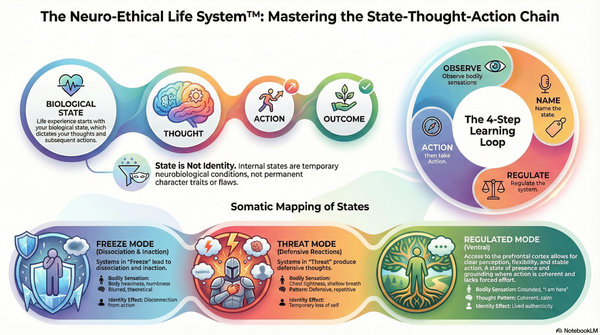
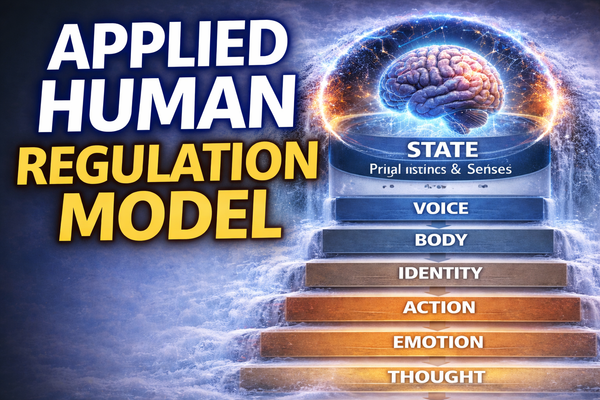
In the proposed model, state is not defined as mood or psychological condition, but as the organism’s total neurobiological context. The sequence is as follows:
- Pre-Cognitive Evaluation (Primary Instinct)
- Sensory contact with the present (Interoception)
- Nervous System State
- Thought
- Emotion
- Meaning
When disruption occurs at the beginning of this chain, thought and emotion do not fail because they are “incorrect,” but because they lack access to the necessary biological resources.
The Failure of Willpower as a Neurobiological Phenomenon
The failure of willpower is neither a moral flaw nor a psychological weakness. It is a logical consequence of a system operating under perceived threat. When the Pre-Cognitive Core determines that safety is insufficient:
- executive functions are constrained,
- choice is replaced by reflexive response,
- behavior shifts to automatic pilot.
Within this framework, the organism does not refuse to act; it does not possess biological permission to act.
Implications for Therapeutic Practice
Recognizing the Pre-Cognitive Core necessitates a radical re-evaluation of therapeutic interventions. Approaches that focus exclusively on:
- cognitive restructuring,
- meaning-making, or
- motivation enhancement,
may fail not due to poor implementation, but because they address levels that are biologically inaccessible.
Regulation must precede explanation.
Safety must precede choice.
Conclusion
What evokes genuine awe in this research is the relocation of causality prior to both thought and nervous system state. The Pre-Cognitive Core offers a new conceptual framework that integrates behavior, regulation, and trauma without pathologization. Human dysfunction is redefined not as a failure of character or will, but as a disconnection from the primary level of safety assessment. Understanding this level is a critical prerequisite for any meaningful therapeutic or scientific progress.
References (Peer-review / PubMed–PMC–Frontiers anchored)
- LeDoux, J.E. (2014). Coming to terms with fear. PNAS.
- LeDoux, J.E. (2000). Emotion circuits in the brain. (PDF accessible).
- Zhang, H. et al. (2024). The contribution of periaqueductal gray in the regulation… Frontiers in Neuroscience.
- Koutsikou, S. et al. (2014). Neural substrates underlying fear-evoked freezing. (PMC).
- Roelofs, K. (2017). Freeze for action: neurobiological mechanisms in freezing. Philosophical Transactions B.
- Ross, J.A. & Van Bockstaele, E.J. (2021). The Locus Coeruleus–Norepinephrine System in Stress… Frontiers in Psychiatry.
- Slavova, D. et al. (2024). Role of the LC-NE system in stress… Neuroscience & Biobehavioral Reviews (ScienceDirect).
- Caestecker, S. et al. (2025). The Locus Coeruleus—Noradrenergic System… (PMC).
- Chandler, D.J. et al. (2015). Evidence for a specialized role of the locus coeruleus… (PMC).
Foundational Bibliography
- Stephen Porges — The Pocket Guide to Polyvagal Theory (vagal shutdown & freeze physiology).
- Jaak Panksepp - Affective Neuroscience (primary affective/instinct systems).
- Peter Levine - Waking the Tiger (somatic discharge & trauma).
- Allan Schore - Affect Regulation and the Origin of the Self (developmental neuropsychology of regulation).
- Daniel Stern - The Present Moment in Psychotherapy (micro-structure of present experience).
- Robert Sapolsky -Behave (evolutionary biology of social threat/submission).
- Christos Koumaradios -NSDS – NeuroSpiritual Detachment Syndrome (structural disruption of presence)
Περίληψη
Η σύγχρονη ψυχολογία και νευροεπιστήμη ερμηνεύουν τη συμπεριφορά κυρίως μέσα από γνωσιακές, συναισθηματικές ή νευροφυσιολογικές διεργασίες. Παρά την πρόοδο των μοντέλων ρύθμισης, παραμένει ένα βασικό ανεξήγητο φαινόμενο: η συστηματική αποτυχία της θέλησης, της πρόθεσης και της λογικής σε καταστάσεις χρόνιου στρες και freeze, ακόμη και όταν δεν παρατηρείται εμφανής ψυχοπαθολογία. Το παρόν άρθρο εισάγει την έννοια του Προ-Γνωστικού Πυρήνα (Pre-Cognitive Core), ενός πρωτογενούς επιπέδου ρύθμισης που προηγείται της νευρικής κατάστασης, της σκέψης και του συναισθήματος. Υποστηρίζεται ότι η ανθρώπινη συμπεριφορά δεν αποτυγχάνει επειδή δυσλειτουργούν ανώτερες λειτουργίες, αλλά επειδή η προ-γνωστική αξιολόγηση επιβίωσης περιορίζει εκ των προτέρων την πρόσβαση σε αυτές.
Εισαγωγή
Τα κυρίαρχα ψυχολογικά και νευροβιολογικά μοντέλα τοποθετούν την αιτιότητα της ανθρώπινης συμπεριφοράς είτε στο επίπεδο της γνωσιακής επεξεργασίας, είτε στο επίπεδο του συναισθήματος, είτε στο αυτόνομο νευρικό σύστημα. Στο πλαίσιο αυτό, η αποτυχία δράσης, η αναβλητικότητα, η παγωμένη συμπεριφορά και η χρόνια δυσλειτουργία ερμηνεύονται ως έλλειμμα δεξιοτήτων, γνωσιακή παραμόρφωση ή απορρύθμιση.
Ωστόσο, παρατηρείται συστηματικά ότι άτομα με επαρκή νοητική ικανότητα, επίγνωση και κίνητρο αδυνατούν να μεταφράσουν τη γνώση σε πράξη. Το φαινόμενο αυτό δεν εξηγείται επαρκώς από τα υπάρχοντα μοντέλα. Το κρίσιμο ερώτημα παραμένει: γιατί η θέληση αποτυγχάνει ακόμη και όταν “όλα δείχνουν σωστά”;
Θεωρητικό Κενό στα Υφιστάμενα Μοντέλα
Τα περισσότερα μοντέλα ρύθμισης ξεκινούν από μία από τις ακόλουθες υποθέσεις:
- ότι η σκέψη προηγείται της συμπεριφοράς,
- ότι το συναίσθημα αποτελεί τον πρωτογενή οδηγό,
- ή ότι το νευρικό σύστημα (ventral/sympathetic/dorsal) αποτελεί το αρχικό σημείο αιτιότητας.
Αυτές οι προσεγγίσεις, αν και χρήσιμες, παραλείπουν ένα κρίσιμο επίπεδο: το τι προηγείται της ίδιας της νευρικής κατάστασης. Με άλλα λόγια, τι καθορίζει αν το νευρικό σύστημα θα κινηθεί προς σύνδεση, κινητοποίηση ή πάγωμα;
Η απουσία αυτού του επιπέδου οδηγεί σε ερμηνευτικά αδιέξοδα και σε παρεμβάσεις που προσπαθούν να “διορθώσουν” διεργασίες που δεν έχουν ακόμη ενεργοποιηθεί.
Ο Προ-Γνωστικός Πυρήνας
Ο Προ-Γνωστικός Πυρήνας ορίζεται ως το πρωτογενές, μη λεκτικό και μη συνειδητό επίπεδο αξιολόγησης του οργανισμού, το οποίο απαντά σε ένα και μόνο ερώτημα:
«Είμαι ασφαλής ή απειλούμαι;»
Η αξιολόγηση αυτή:
- δεν αποτελεί σκέψη,
- δεν είναι συναίσθημα,
- δεν είναι επιλογή.
Είναι μια δυαδική βιολογική απόφαση επιβίωσης, η οποία προηγείται κάθε άλλης λειτουργίας. Από αυτή την πρώτη απάντηση απορρέουν:
- η δυνατότητα αίσθησης του παρόντος,
- η ρύθμιση του νευρικού συστήματος,
- η πρόσβαση στη σκέψη,
- η εμπειρία συναισθήματος,
- η κατασκευή νοήματος και ταυτότητας.
Η έρευνα υποστηρίζει ότι όταν αυτό το επίπεδο παραμένει σε κατάσταση απειλής, όλα τα ανώτερα επίπεδα λειτουργούν υπό περιορισμό ή αποκλεισμό.
Η Ανατομία του “State”
Στο προτεινόμενο μοντέλο, το state δεν ορίζεται ως διάθεση ή ψυχολογική κατάσταση, αλλά ως η συνολική νευροβιολογική συνθήκη του οργανισμού. Η ακολουθία έχει ως εξής:
- Προ-Γνωστική Αξιολόγηση (Πρωτογενές Ένστικτο)
- Αίσθηση και επαφή με το παρόν (Interoception)
- Νευρική Κατάσταση
- Σκέψη
- Συναίσθημα
- Νόημα
Όταν η αλυσίδα αυτή διαταράσσεται στην αρχή της, η σκέψη και το συναίσθημα δεν αποτυγχάνουν επειδή είναι “λανθασμένα”, αλλά επειδή δεν έχουν πρόσβαση στους απαραίτητους πόρους.
Η Αποτυχία της Θέλησης ως Νευροβιολογικό Φαινόμενο
Η αποτυχία της θέλησης δεν αποτελεί ηθικό ή ψυχολογικό έλλειμμα. Αντιθέτως, αποτελεί λογική συνέπεια ενός συστήματος σε κατάσταση απειλής. Όταν ο Προ-Γνωστικός Πυρήνας εκτιμά ότι η ασφάλεια δεν είναι επαρκής:
- οι εκτελεστικές λειτουργίες περιορίζονται,
- η επιλογή αντικαθίσταται από αντανακλαστική αντίδραση,
- η συμπεριφορά μετατρέπεται σε αυτόματο πιλότο.
Σε αυτό το πλαίσιο, ο οργανισμός δεν “αρνείται” να δράσει· δεν έχει τη βιολογική άδεια να δράσει.
Επιπτώσεις για τη Θεραπευτική Πρακτική
Η αναγνώριση του Προ-Γνωστικού Πυρήνα επιβάλλει μια ριζική αναθεώρηση των παρεμβάσεων. Προσεγγίσεις που στοχεύουν αποκλειστικά:
- στη γνωσιακή αναδόμηση,
- στην αλλαγή νοήματος,
- ή στην αύξηση κινήτρου,
ενδέχεται να αποτυγχάνουν όχι λόγω κακής εφαρμογής, αλλά επειδή απευθύνονται σε επίπεδα που δεν είναι προσβάσιμα.
Η ρύθμιση οφείλει να προηγείται της εξήγησης. Η ασφάλεια προηγείται της επιλογής.
Συμπέρασμα
Το στοιχείο που δημιουργεί πραγματικό δέος σε αυτή την έρευνα είναι η μετατόπιση της αιτιότητας πριν από τη σκέψη και το νευρικό σύστημα. Ο Προ-Γνωστικός Πυρήνας προσφέρει ένα νέο εννοιολογικό πλαίσιο που ενοποιεί συμπεριφορά, ρύθμιση και τραύμα χωρίς παθολογιοποίηση. Η ανθρώπινη δυσλειτουργία επαναπροσδιορίζεται όχι ως αποτυχία χαρακτήρα ή βούλησης, αλλά ως αποσύνδεση από το πρωτογενές επίπεδο ασφάλειας. Η κατανόηση αυτού του επιπέδου αποτελεί κρίσιμη προϋπόθεση για κάθε ουσιαστική θεραπευτική ή ερευνητική πρόοδο.