What the Polyvagal Theory Is - and Is Not
And How NeuroSpiritual Identity Reconstruction Represents Its Evolution and Clinical Application
By Christos (Bodhipala) Koumaradios, PhD
Founder of NeuroSpiritual Therapy®
Integrative Scientist & Researcher / Founder in NeuroSpiritual Therapy
I want to begin with clarity and respect: I consider Stephen Porges one of the most important scientists of our time. His contribution fundamentally changed how we understand the autonomic nervous system, safety, and trauma.
What the Polyvagal Theory Really Is
The Polyvagal Theory is a neurobiological, descriptive model.
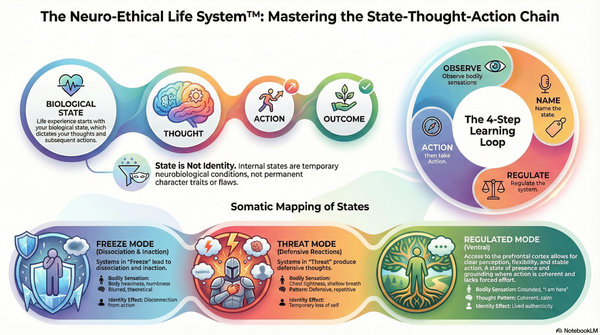
It explains how the autonomic nervous system is organized, how ventral, sympathetic, and dorsal states emerge, and how neuroception operates the unconscious detection of safety or threat prior to conscious thought.
It offered something foundational:
a framework for understanding safety, fear, and connection.
That contribution alone was revolutionary.
What the Polyvagal Theory Is Not
The Polyvagal Theory is not:
- a structured system of application
- a step-by-step protocol
- a model of identity
- a system of vocal or somatic mapping
- a model of agency or identity reconstruction
It does not tell you what to do.
It tells you what is happening in the nervous system.
And that is exactly what a theory should do.
From Understanding to Function: Why NSIR™ Emerged
My research began with a simple, practical question:
If we know what is happening in the nervous system, why do so many people understand their experience yet cannot change it?
The answer was clear:
because most approaches remain at the level of understanding, not function.
This led to a functional model:
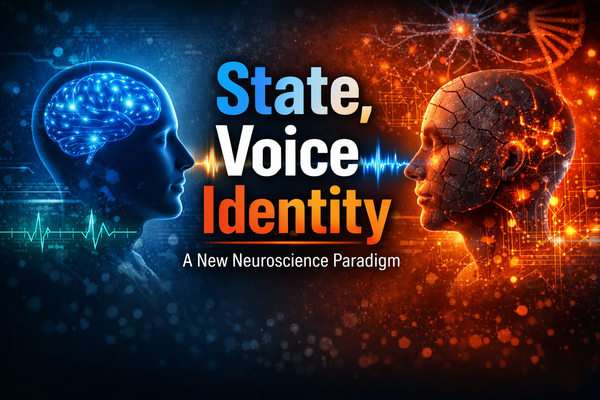
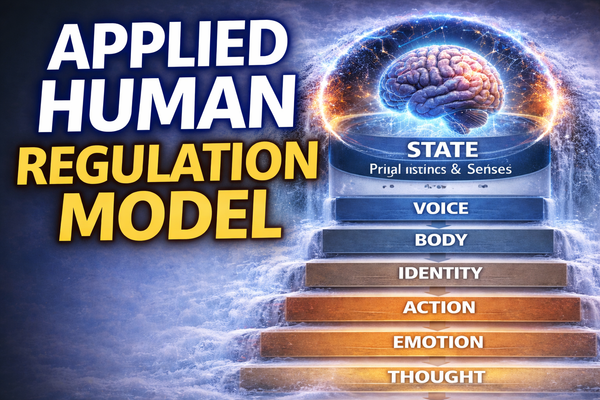
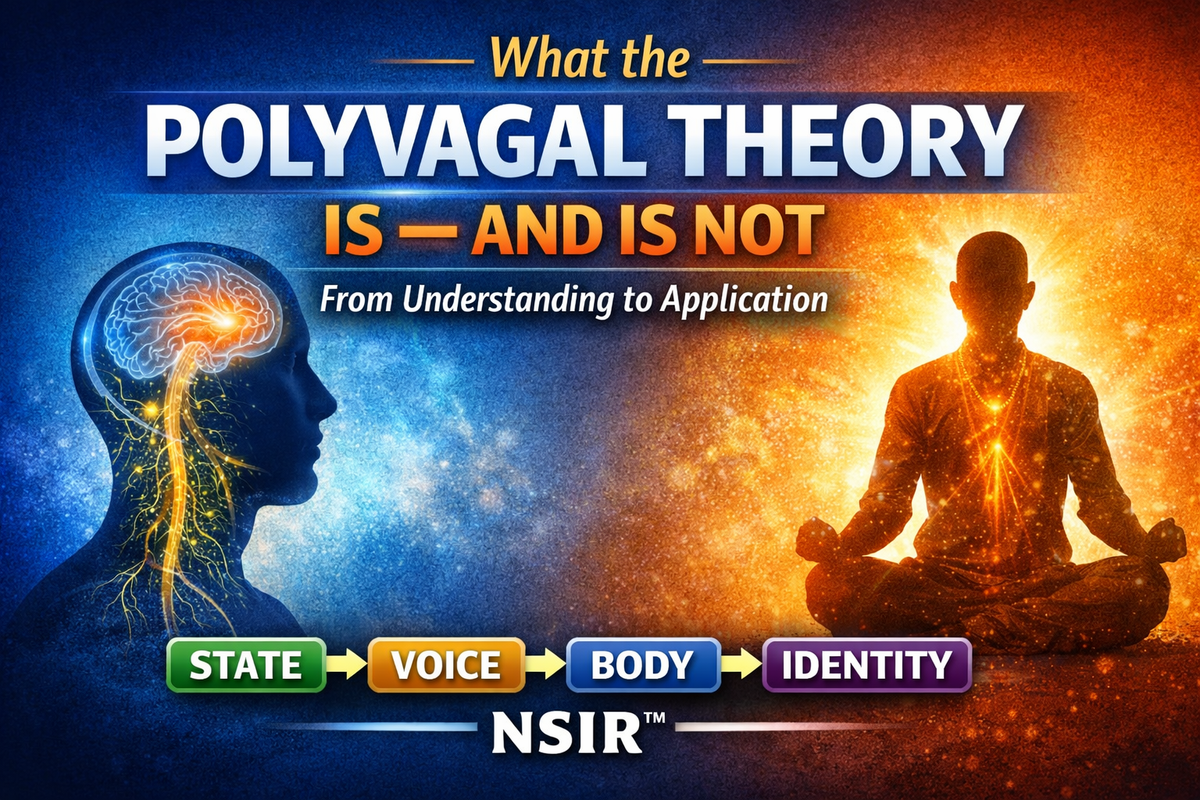
State → Voice → Body → Identity
Not as a theory.
As a sequence of neurobiological access.
A First Fundamental Differentiation
The Polyvagal Theory:
- describes states
- recognizes the ventral system
- does not provide a sequential model of application
NeuroSpiritual Identity Reconstruction:
- intervenes directly at the level of state
- builds a stable ventral baseline
- follows a precise functional order
We do not begin with “how you feel.”
We do not begin with narrative or the past.
We begin with the state the system is in
and build from there neurobiologically.
Everything else follows naturally.
The Central Axis: Voice as a State Indicator
The Polyvagal Theory recognizes the Social Engagement System.
However, it does not use the voice as a central tool for assessment and regulation.
Here, my approach diverges clearly.
The voice is the fastest and most accurate indicator of state—
before thought, before narrative, before conscious intention.
Within NSIR™, I differentiate:
- Identity Voice
- Trauma Voice
And I work vocally—without analysis, without interpretation, without psychological storytelling.
This does not exist within the Polyvagal Theory.
State-Dependent Identity: Where Theory Ends and Application Begins
The Polyvagal Theory does not contain a theory of identity.
It does not define the self.
It does not address agency.
Here I introduce something fundamentally different:
State-dependent identity.
Identity is not psychological content.
It is not a story.
It is not a belief.
It is a neurobiological function that emerges when the system is regulated.
And this does not remain theoretical.
NSIR™ includes:
- a functional architecture
- structured protocols
- indicators of state, voice, and agency
- assessment and trajectory tracking
What Changes Radically
This reframes:
- how professionals and facilitators are trained
- how nervous system regulation is discussed
- how “holistic” work is defined
- how individual work occurs—without analysis or pressure
- and how groups function, with shared neurobiological reference and real safety
The Polyvagal Theory is the ground.
NeuroSpiritual Identity Reconstruction is the application built upon that ground.
This is not a rejection.
It is an evolution.
The NSIR™ Protocols: Not Techniques, but Functional Architecture
In NeuroSpiritual Identity Reconstruction (NSIR™), protocols do not operate independently.
They are not tools selected according to a problem.
They are sequential stages of neurobiological access.
Their logic is not therapeutic in the classical sense.
It is functional.
Each protocol opens the next.
If a stage is skipped, the system has no foundation.
The sequence is precise:
VEA - Stabilizing State
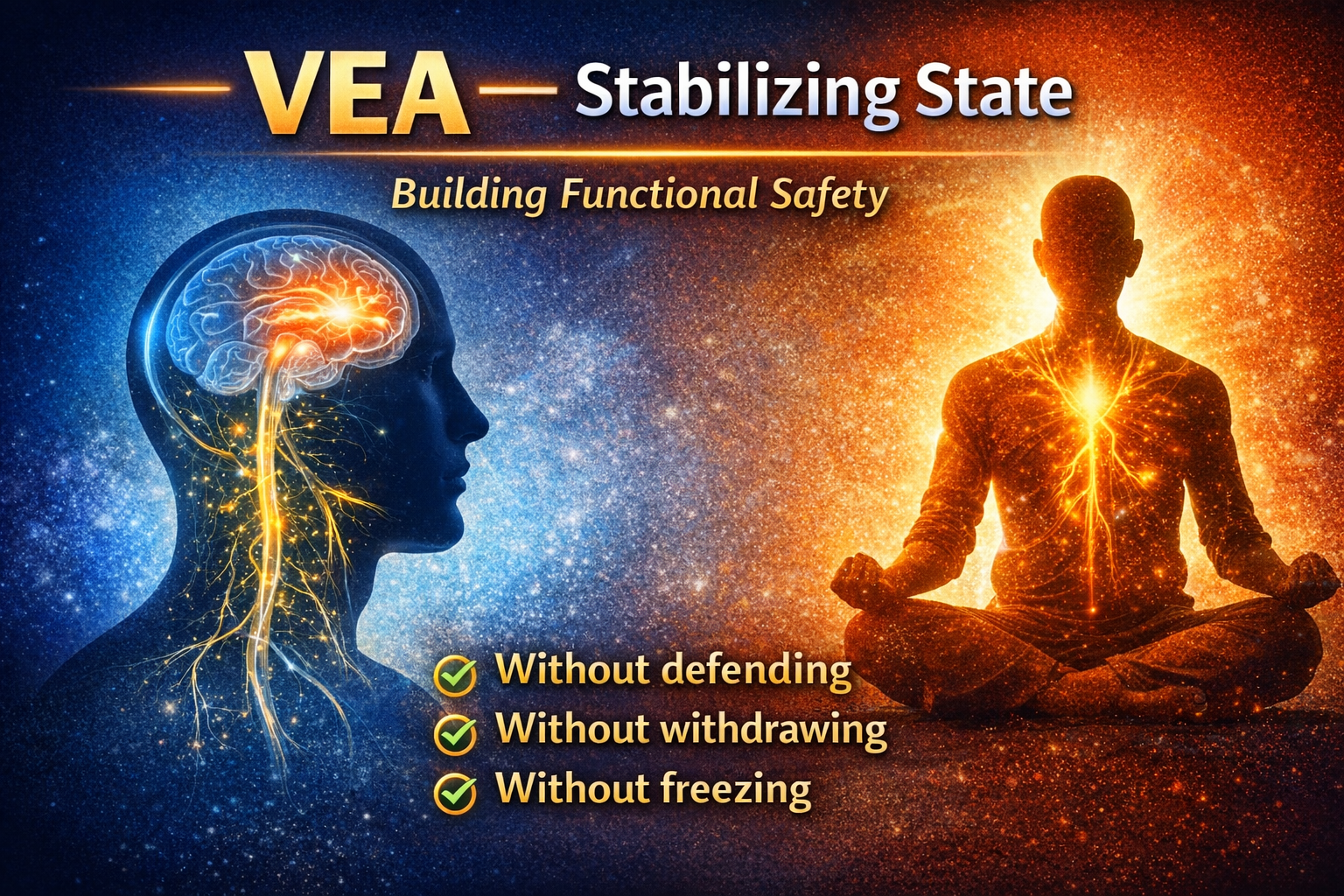
VEA (Ventral Embodied Access) does not aim at relaxation.
It aims at functional safety.
Here, the body learns that it can exist
without defending, without withdrawing, without freezing.
Without stable state, no voice or identity work holds.
VEA establishes the neurobiological ground of the session.
IDR - Differentiating Who Is Speaking
IDR (Identity–Dialogue Resolution) does not analyze content.
It differentiates voices.
A critical shift occurs:
the person begins to recognize when the trauma voice is speaking
and when the identity voice emerges.
Not through understanding.
Through direct auditory and somatic experience.
This differentiation is a prerequisite for agency.
VAC - Aligning the Somatic–Vocal Arc
VAC (Vocal–Autonomic Coherence) integrates body and voice
where mismatches often exist:
body in freeze, voice in effort,
or voice collapsed, body hyperactivated.
Alignment restores neurobiological coherence.
The system begins to function as a unified field.
SFI - Interrupting Freeze
SFI (Somatic Freeze Interruption) does not “unblock” freeze.
It interrupts it at the moment it appears.
Not with pressure.
Not with expression.
But with targeted intervention at the state–voice loop.
Freeze ceases to be fate
and becomes a recognizable pattern that can be interrupted.
RPT - Installing the New Identity
RPT (Regulated Persona Transmission) does not create a new narrative.
It installs state-dependent identity.
Identity here is not “worked on.”
It emerges when the system is regulated.
And then identity ceases to be an idea
and becomes a functional guide for life.
What Each NSIR™ Session Transforms
In this sequence, every NSIR™ session transforms:
- the body → into stable ground
- the voice → into an access tool
- identity → into a functional system of choice
Not through analysis.
Not through effort.
But through directed neurobiological reorganization.
About the Author
Christos (Bodhipala) Koumaradios, PhD
Founder of NeuroSpiritual Therapy®
Integrative Scientist & Researcher / Founder in NeuroSpiritual Therapy
Christos (Bodhipala) Koumaradios is an integrative scientist, researcher, and clinical innovator, and the founder of NeuroSpiritual Therapy® (NAT) and the NeuroSpiritual Identity Reconstruction (NSIR™) framework.
His work focuses on the neurobiological foundations of identity, action, and human self-regulation, with particular emphasis on the freeze response, submission patterns, and the collapse of agency as functions of the nervous system, rather than as psychological or cognitive dysfunctions. His approach to trauma, procrastination, and identity disturbance is state-based and non-cognitive, grounded in neuroscience, neurobiology, embodied regulation, and evolutionary first-instinct mechanisms.
His scientific background integrates formal studies in psychology and health sciences with long-term research in nervous system regulation, voice as a state indicator, and Zen-based practices. He is a long-term Zen practitioner and teacher, applying Zen not as philosophy or spiritual narrative, but as a neurobiological technology of presence, regulation, and restoration of agency.
He is the author of the clinical and research framework NeuroSpiritual Identity Reconstruction (NSIR™), in which identity is defined not as a narrative or psychological construct, but as a state-dependent neurobiological function. His work introduces concepts such as:
- First Instinct Biology as a function of human spirituality
- the functional integration of State–Voice–Body
- Trauma Logic versus Identity Logic
- neurospiritual reconstruction as a return to biological intelligence
NeuroSpiritual Therapy® has received formal recognition from the Complementary Medical Association (CMA) and is applied internationally within therapeutic, educational, and research contexts.
Koumaradios’ work bridges theoretical neuroscience with clinical application, proposing a new paradigm in which change is achieved not through analysis, effort, or insight, but through the restoration of the nervous system’s natural capacity for regulation, identity, and action.
References
Porges, S. W. (2011). The polyvagal theory: Neurophysiological foundations of emotions, attachment, communication, and self-regulation. New York, NY: W. W. Norton & Company.

Koumaradios, C. (B.). (2025). NeuroSpiritual Identity Reconstruction (NSIR™): A clinical framework for state-based identity regulation and agency restoration. Unpublished manuscript / clinical framework.
 chriskoumaradios
Τι είναι και τι δεν είναι η Polyvagal Theory
Και πώς η Νευροπνευματική Αναδόμηση Ταυτότητας αποτελεί την εξέλιξη και την κλινική της εφαρμογή
Του Christos (Bodhipala) Koumaradios, PhD
Founder of NeuroSpiritual Therapy®
Integrative Scientist & Researcher / Founder in NeuroSpiritual Therapy
Θέλω να ξεκινήσω με σαφήνεια και σεβασμό: θεωρώ τον Stephen Porges έναν από τους σημαντικότερους επιστήμονες της εποχής μας. Η συμβολή του άλλαξε ριζικά τον τρόπο με τον οποίο κατανοούμε το αυτόνομο νευρικό σύστημα, την ασφάλεια και το τραύμα.
Τι είναι πραγματικά η Polyvagal Theory
Η Polyvagal Theory είναι ένα νευροβιολογικό, περιγραφικό μοντέλο.
Εξηγεί πώς οργανώνεται το αυτόνομο νευρικό σύστημα, πώς αναδύονται τα ventral, sympathetic και dorsal states, και πώς λειτουργεί η neuroception η ασυνείδητη ανίχνευση ασφάλειας ή απειλής πριν από τη συνειδητή σκέψη.
Μας προσέφερε κάτι θεμελιώδες:
ένα πλαίσιο κατανόησης της ασφάλειας, του φόβου και της σύνδεσης.
Αυτό και μόνο ήταν επαναστατικό.
Τι δεν είναι η Polyvagal Theory
Η Polyvagal Theory δεν είναι:
- δομημένο σύστημα εφαρμογής
- πρωτόκολλο βημάτων
- μοντέλο ταυτότητας
- σύστημα φωνητικής ή σωματικής χαρτογράφησης
- μοντέλο agency ή αναδόμησης ταυτότητας
Δεν σου λέει τι να κάνεις.
Σου λέει τι συμβαίνει στο νευρικό σύστημα.
Και αυτό είναι ακριβώς αυτό που οφείλει να κάνει μια θεωρία.
Από την κατανόηση στη λειτουργία: γιατί γεννήθηκε το NSIR™
Η δική μου έρευνα ξεκίνησε από ένα απλό, πρακτικό ερώτημα:
Αν γνωρίζουμε τι συμβαίνει στο νευρικό σύστημα, γιατί τόσοι άνθρωποι κατανοούν την εμπειρία τους αλλά δεν μπορούν να την αλλάξουν;
Η απάντηση ήταν ξεκάθαρη:
επειδή οι περισσότερες προσεγγίσεις μένουν στο επίπεδο της κατανόησης, όχι της λειτουργίας.
Έτσι προέκυψε ένα λειτουργικό μοντέλο:
State → Voice → Body → Identity
Όχι ως θεωρία.
Αλλά ως σειρά νευροβιολογικής πρόσβασης.
Πρώτη θεμελιώδης διαφοροποίηση
Η Polyvagal Theory:
- περιγράφει τα states
- αναγνωρίζει το ventral σύστημα
- δεν προσφέρει διαδοχικό μοντέλο εφαρμογής
Η Νευροπνευματική Αναδόμηση Ταυτότητας:
- παρεμβαίνει άμεσα στο επίπεδο του state
- χτίζει ένα σταθερό ventral baseline
- ακολουθεί μια ακριβή λειτουργική σειρά
Δεν ξεκινάμε από το «πώς νιώθεις».
Δεν ξεκινάμε από αφήγηση ή παρελθόν.
Ξεκινάμε από το state στο οποίο βρίσκεται το σύστημα
και χτίζουμε από εκεί, νευροβιολογικά.
Όλα τα υπόλοιπα ακολουθούν φυσιολογικά.
Ο κεντρικός άξονας: η φωνή ως δείκτης state
Η Polyvagal Theory αναγνωρίζει το Social Engagement System.
Όμως δεν χρησιμοποιεί τη φωνή ως κεντρικό εργαλείο αξιολόγησης και ρύθμισης.
Εδώ η προσέγγισή μου διαφοροποιείται ξεκάθαρα.
Η φωνή είναι ο ταχύτερος και ακριβέστερος δείκτης του state
πριν από τη σκέψη, πριν από την αφήγηση, πριν από τη συνειδητή πρόθεση.
Στο NSIR™ διαχωρίζω:
- Φωνή Ταυτότητας
- Φωνή Τραύματος
Και εργάζομαι φωνητικά χωρίς ανάλυση, χωρίς ερμηνεία, χωρίς ψυχολογική αφήγηση.
Αυτό δεν υπάρχει στην Polyvagal Theory.
State-dependent identity: εκεί που τελειώνει η θεωρία και αρχίζει η εφαρμογή
Η Polyvagal Theory δεν περιλαμβάνει θεωρία ταυτότητας.
Δεν ορίζει τι είναι ο εαυτός.
Δεν πραγματεύεται το agency.
Εδώ εισάγω κάτι ριζικά διαφορετικό:
State-dependent identity.
Η ταυτότητα δεν είναι ψυχολογικό περιεχόμενο.
Δεν είναι ιστορία.
Δεν είναι πεποίθηση.
Είναι νευροβιολογική λειτουργία που αναδύεται όταν το σύστημα είναι ρυθμισμένο.
Και αυτό δεν μένει θεωρητικό.
Το NSIR™ περιλαμβάνει:
- λειτουργική αρχιτεκτονική
- δομημένα πρωτόκολλα
- δείκτες state, φωνής και agency
- αξιολόγηση και παρακολούθηση πορείας
Τι αλλάζει ριζικά
Αυτό αναπλαισιώνει:
- τον τρόπο που εκπαιδεύουμε επαγγελματίες και facilitators
- τον τρόπο που μιλάμε για τη ρύθμιση του νευρικού συστήματος
- τον τρόπο που ορίζουμε το «ολιστικό»
- τον τρόπο που δουλεύουμε ατομικά χωρίς ανάλυση και χωρίς πίεση
- και τον τρόπο που λειτουργούν οι ομάδες, με κοινό νευροβιολογικό πλαίσιο και πραγματική ασφάλεια
Η Polyvagal Theory είναι το έδαφος.
Η Νευροπνευματική Αναδόμηση Ταυτότητας είναι η εφαρμογή πάνω σε αυτό το έδαφος.
Αυτό δεν είναι απόρριψη.
Είναι εξέλιξη.
Τα Πρωτόκολλα NSIR™: όχι τεχνικές, αλλά λειτουργική αρχιτεκτονική
Στη Νευροπνευματική Αναδόμηση Ταυτότητας (NSIR™), τα πρωτόκολλα δεν λειτουργούν μεμονωμένα.
Δεν είναι εργαλεία που επιλέγονται ανάλογα με το πρόβλημα.
Είναι διαδοχικά στάδια νευροβιολογικής πρόσβασης.
Η λογική τους δεν είναι θεραπευτική με την κλασική έννοια.
Είναι λειτουργική.
Κάθε πρωτόκολλο ανοίγει το επόμενο.
Αν παραλειφθεί ένα στάδιο, το σύστημα δεν έχει βάση.
Η ακολουθία είναι ακριβής:
VEA - Σταθεροποίηση του State
Το VEA (Ventral Embodied Access) δεν στοχεύει στη χαλάρωση.
Στοχεύει στη λειτουργική ασφάλεια.
Εδώ το σώμα μαθαίνει ότι μπορεί να υπάρχει
χωρίς να αμύνεται, χωρίς να αποσύρεται, χωρίς να παγώνει.
Χωρίς σταθερό state, καμία εργασία φωνής ή ταυτότητας δεν διατηρείται.
Το VEA εγκαθιστά το νευροβιολογικό έδαφος της συνεδρίας.
IDR - Διαχωρισμός του ποιος μιλάει
Το IDR (Identity–Dialogue Resolution) δεν αναλύει περιεχόμενο.
Διαχωρίζει φωνές.
Συμβαίνει μια κρίσιμη μετατόπιση:
ο άνθρωπος αρχίζει να αναγνωρίζει πότε μιλά η φωνή του τραύματος
και πότε αναδύεται η φωνή της ταυτότητας.
Όχι μέσω κατανόησης.
Μέσω άμεσης ακουστικής και σωματικής εμπειρίας.
Αυτός ο διαχωρισμός είναι προϋπόθεση του agency.
VAC - Ευθυγράμμιση του somatic–vocal τόξου
Το VAC (Vocal–Autonomic Coherence) ενοποιεί σώμα και φωνή,
εκεί όπου συχνά υπάρχουν αποκλίσεις:
σώμα σε freeze, φωνή σε προσπάθεια,
ή φωνή σε κατάρρευση και σώμα σε υπερδιέγερση.
Η ευθυγράμμιση αποκαθιστά νευροβιολογική συνοχή.
Το σύστημα αρχίζει να λειτουργεί ως ενιαίο πεδίο.
SFI - Διακοπή του Freeze
Το SFI (Somatic Freeze Interruption) δεν «ξεμπλοκάρει» το freeze.
Το διακόπτει τη στιγμή που εμφανίζεται.
Όχι με πίεση.
Όχι με έκφραση.
Αλλά με στοχευμένη παρέμβαση στο state–voice loop.
Το freeze παύει να είναι μοίρα
και γίνεται αναγνωρίσιμο μοτίβο που μπορεί να διακοπεί.
RPT - Εγκατάσταση της νέας ταυτότητας
Το RPT (Regulated Persona Transmission) δεν δημιουργεί νέο αφήγημα.
Εγκαθιστά state-dependent identity.
Η ταυτότητα εδώ δεν «δουλεύεται».
Αναδύεται όταν το σύστημα είναι ρυθμισμένο.
Και τότε η ταυτότητα παύει να είναι ιδέα
και γίνεται λειτουργικός οδηγός ζωής.
Τι μετατρέπει κάθε συνεδρία NSIR™
Με αυτή τη σειρά, κάθε συνεδρία NSIR™ μετατρέπει:
- το σώμα → σε σταθερό έδαφος
- τη φωνή → σε εργαλείο πρόσβασης
- την ταυτότητα → σε λειτουργικό σύστημα επιλογών
Όχι μέσω ανάλυσης.
Όχι μέσω προσπάθειας.
Αλλά μέσω κατευθυνόμενης νευροβιολογικής αναδιοργάνωσης.